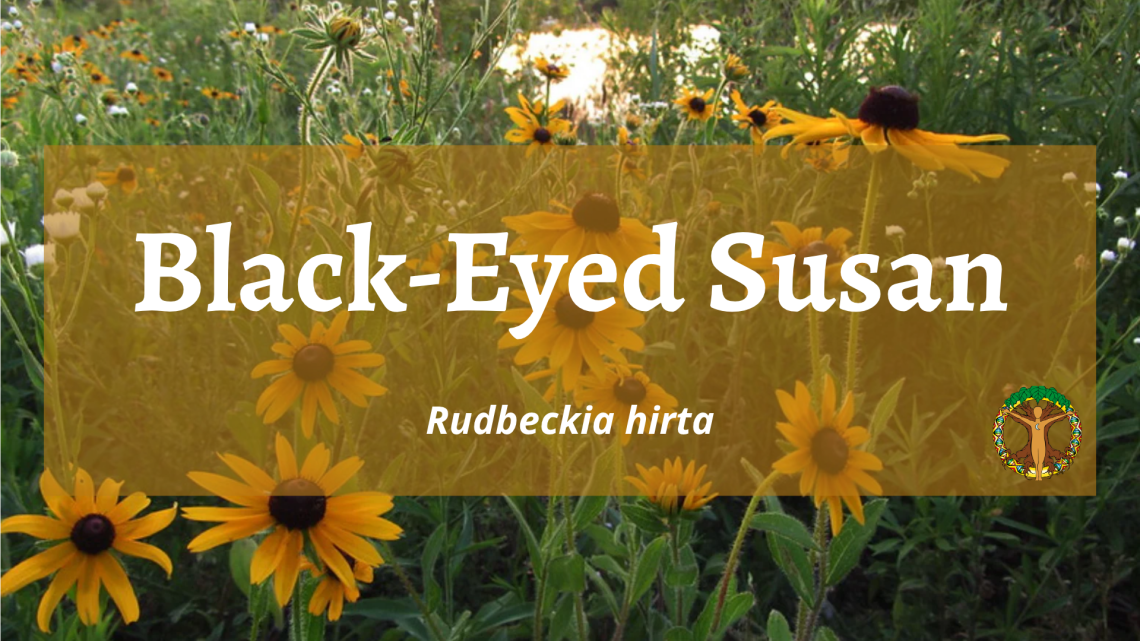
Black-Eyed Susan
Contributed by
Samantha Johnson
Latin Name & Family
Rudbeckia hirta – Asteraceae
Common Names
Black-eyed Susan, gloriosa daisy, coneflower, deer-eyed-daisy
Habitat & Botanical ID
Rudbeckia hirta, commonly known as Black-eyed Susan, is a familiar wildflower of Florida and one of several Rudbeckia species found throughout the state. Native to North America, it is an adaptable plant that may grow as an annual, biennial, or perennial depending on environmental conditions. Black-eyed Susans occur in sunny, open ecosystems and suit Florida’s varied habitats. These flowers prefer full sun and well-drained soil, are drought-tolerant, and moderately salt-tolerant (making this a good choice for coastal gardens).
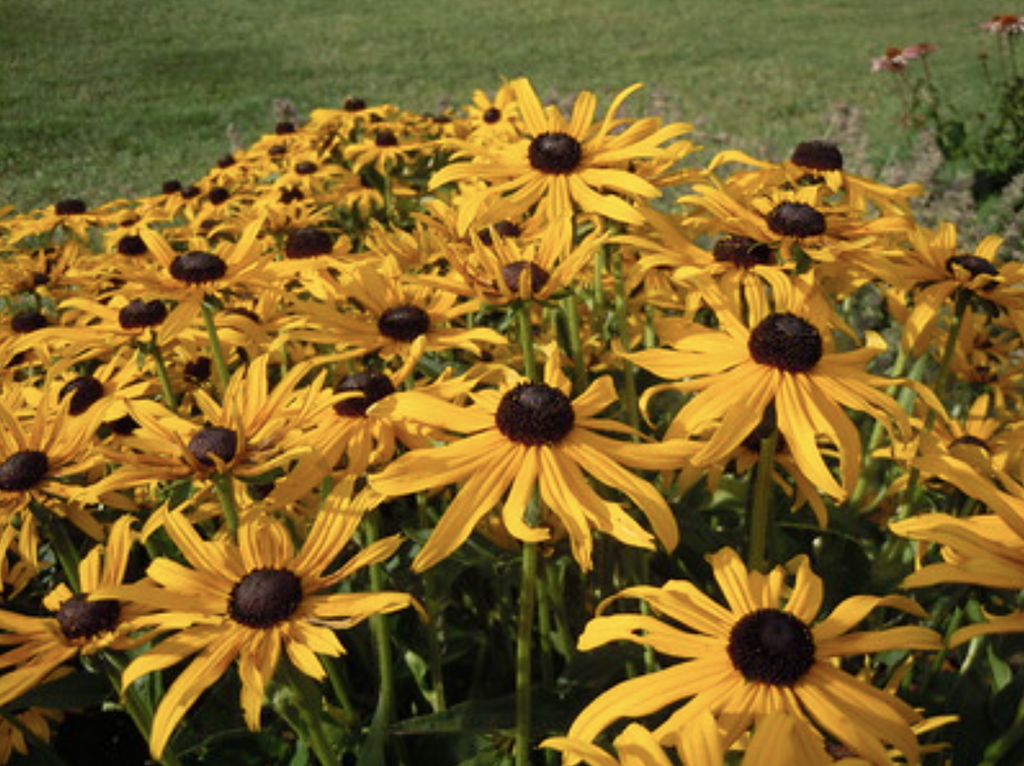
Black-eyed Susan typically reaches 2 to 3 feet in height and grows in open, spreading clumps. The foliage consists of green, alternate, simple leaves with entire margins, ovate in shape, measuring 4 to 8 inches long. The stems are green and distinctly rough, reflecting the Latin name of the genus, “hirta”, meaning “hairy”. The flowers are showy & daisy-like, characterized by their dark brown center of disc flowers. The disc flowers are surrounded by yellow, orange, or red-orange ray flowers, depending on the cultivar. Their vibrant flowers often bloom and thrive from late summer into fall.
USDA Hardiness Zone: 2 – 11
Parts Used
Roots, flowers, leaves
History & Tradition
Across its broad native range, Rudbeckia hirta has a long history of use among Indigenous peoples including the Cherokee, Iroquois, Ojibwa, Potawatomi, Seminole, and Secwepemc. The plant has been traditionally valued for antimicrobial, anthelmintic, anti-inflammatory, and diuretic properties. The roots, flowers, & leaves of Black-eyed Susan are prepared as washes, poultices, decoctions, and infusions. Rudbeckia hirta preparations are applied as remedies for colds, fevers, headaches, earaches, diarrhea, indigestion, sores, worms and other parasitic infections, snakebites, and venereal diseases. Beyond its medicinal uses, R. hirta has held spiritual significance, including use as a protective amulet.
Both Black-eyed Susan & Echinacea species belong to the Asteraceae family: tribe Heliantheae, and share some overlapping medicinal uses. Echinacea & Rudbeckia species are both used for immune support, antimicrobial activity, skin complaints, and notably, traditional use as a topical application for snake bites. Native North American Echinacea species are considered “At-Risk” by United Plant Savers due to sustained popularity and habitat loss; Rudbeckia may be a more abundant alternative.
Energetics
Cooling, drying, stimulating
Actions
- Alterative
- Astringent
- Analgesic
- Anti-microbial
- Anti-bacterial
- Anti-fungal
- Anti-inflammatory
- Anthelmintic (antiparasitic specifically to worms)
- Antioxidant
- Immunomodulating/Immune stimulating
- Diuertic
Indications
- Bacterial & viral infections
- Colds
- Flus
- Other respiratory infections
- Infections of the skin
- Infections of the genitourinary tract
- Fevers
- Fungal infections
- Candida spp.
- Parasitic worm infections
- Pain & inflammation
- Earaches
- Snakebites
Systems
- Immune
- Lymphatic
- Respiratory
- Integumentary (skin)
- Genitourinary
- Gastrointestinal
Constituents
Major constituent groups reported in R. hirta include:
- Sesquiterpenoids & sesquiterpene lactones
- Flavonoids & flavonoid glycosides
- Polyphenolic acids
- Chlorogenic acids
- Polysaccharides
- Terpenes
- Fatty acids
- Polyacetylenes & polyynes
Together, these constituents contribute to Rudbeckia hirta’s traditional and experimentally observed antioxidant, antimicrobial, anti-inflammatory, anthelmintic, and immunomodulatory activities.
Preparation
Harvest Rudbeckia hirta roots in the fall, in their 2nd or 3rd year of growth. Wash roots thoroughly & chop finely (or combine root & ethanol in a blender). Macerate 1:2 in 50%-95% ethanol. Let sit in a cool, dark location for a minimum of 2 weeks, shaking daily. Once maceration is complete, press and strain the tincture. Bottle & label. Take 1 – 5 mL (0.2-1 tsp) 3 – 6 x daily as needed. The tincture can also be applied topically for skin infections & inflammation.
Contraindications/Warnings
Avoid with Asteraceae allergies. The fresh plant may cause contact dermatitis. Due to Rudbeckia’s similarities with Echinacea and its immune-stimulating effects, use caution with autoimmune conditions.
Other Uses
Black-eyed Susans are adaptable, easy-to-grow additions to the garden that provide resources for various pollinators. Additionally, they make fabulous cut flowers. The flowers have also historically been used to produce yellow and green dyes.
Related Species
Several closely related Rudbeckia species have their own histories of traditional use and may be encountered alongside R.hirta.
Cutleaf Coneflower (Rudbeckia laciniata) – Also known as so-chan, this species has a long history as a Cherokee and Appalachian wild green and medicinal herb. Its young spring leaves are traditionally boiled and fried and eaten as a nutritious seasonal food. The leaves and flowers have also been used historically for indigestion, burns, and as an emmenagogue. The Physiomedicalist Dr. William Cook described R. laciniata in the 1869 Physiomedical Dispensatory as a gentle kidney tonic and soothing to the uterine nerves.
Orange Coneflower (Rudbeckia fulgida) – Native to the eastern United States and Midwest, R. fulgida has traditional Cherokee uses including preparations of the aerial parts for genitourinary conditions and preparations of the roots as an external wash for snakebites, sores, swelling, and parasitic infections.
References
Cook, W. (1896). The Physiomedical Dispensatory: Rudbeckia Laciniata. Thimbleweed, Cone-Flower. Via: https://www.henriettes-herb.com/eclectic/cook/RUDBECKIA_LACINIATA.htm
Foster, S., & Duke, J. (2000). Peterson Field Guide to Eastern & Central Medicinal Plants & Herbs (2nd ed., p. 142). Houghton Mifflin Company.
Garrett, J. T. (2003). The Cherokee Herbal (pp. 159, 210). Bear & Company.
Gilman, E. F., Howe, T., Klein, R. W., & Hanser, G. (2023, October). Rudbeckia hirta, Black-eyed Susan, Gloriosa Daisy. Ask IFAS. https://ask.ifas.ufl.edu/publication/FP512
[Herbal Radio Podcast]. (2021, August 17). Rudbeckia Plant Walk with Howie Brounstein & Steven Yeagar [Podcast]. Mountain Rose Herbs.
University of South Florida (2025). Rudbeckia. Atlas of Florida Plants. https://florida.plantatlas.usf.edu/genus/1064
Vardeman, E., Lyles, J. T., & Quave, C. L. (2022). The genus Rudbeckia: A critical review of its traditional medicinal uses, phytochemistry, and pharmacology. Journal of Herbal Medicine, 31, 100530. https://doi.org/10.1016/j.hermed.2021.100530
Image 1: Rudbeckia hirta – Kramer, Rachel – Rudbeckia hirta, the Black-eyed Susan. Creative Commons. 2012.
Image 2: Rudbeckia hirta – Lavin, Matt – Creative Commons. 2010.